dWell-one is the operating system for housing organizations — one
interconnected platform that follows a person through every stage of the path to
housing stability, from an encampment to a stable, thriving home.
Connected modules1 client recordEvery stage, street to stability
What is dWell-one
One platform for the entire housing response
Housing organizations today run on a dozen disconnected tools — an HMIS here, a property
manager there, forms in one place, signatures in another. Information gets re-typed between
systems all day, and clients fall through the gaps between them.
dWell-one — deployed in Kansas City as dWell-KC —
replaces that stack with a single system. Encampment outreach, shelter beds, housing
placement, case management, property management, accounting, HMIS reporting, and every
document in between all live in one connected record. Built with the case workers,
outreach teams, and housing agencies doing the work on the ground, it is designed to
change how homelessness response and housing services are run across the country.
Housing First, Perfected
Housing First means tracking a client through every stage
Housing First says: get a person into housing, then wrap services around them. The
principle is right — but most software abandons the client somewhere along the way,
leaving a gap in the pathway to a thriving, stable life.
dWell-one closes that gap. It is one continuous record from the first outreach contact
to long-term stability — not a handoff between disconnected systems. Stability
doesn't just mean housed. It means healthy, settled, and thriving.
One client, one record
A single longitudinal record follows the person across every program, agency, and stage — no re-intake, no lost history.
Every stage connected
Encampment, shelter, shared housing, permanent housing, and wellness are modules of the same system, not separate tools.
Housing First outcomes, measured
Returns to homelessness, length of stay, and stability are tracked continuously — not reconstructed once a year for a report.
Built with the field
Designed alongside outreach workers, case managers, and housing agencies — for the people doing the work, not just the funders.
Every client's information — secure, private, consented
All client information is secure and private. Releases of Information and HIPAA
consent forms gate exactly what's visible, to which staff, at which agency — at every
stage of the journey. And the documents that protect it, from a signed ROI to a photo
ID, are captured and stored as easily as snapping a photo.
Releases of Information (ROI)HIPAA-compliant consentRole-based visibilityEncrypted document vaultFull audit trail
The Housing Journey
From the street to stability
Every person's path is different, but it moves through the same stages. dWell-one has a
module purpose-built for each one — and they all write to the same client record.
1
Street & Encampment First contact
Outreach teams find and engage people where they are. Encampments are mapped, populations counted, needs logged, and every field visit recorded against the person's record.
Encampment ManagementClient Management
2
Shelter Stabilization
Emergency and interim beds with real-time availability, digital intake and exit, and nightly rosters — so a bed is never lost and an exit is never a dead end.
Room-level assignments inside shared units, roommate matching, shared leases, and household agreements — a stable bridge between shelter and a place of one's own.
Match clients to available units, manage landlords and leases, run HQS/NSPIRE inspections, and disburse deposits and rental assistance — placement tracked end to end.
Walk through each piece of the platform. Every module is a full application in its own
right — and every one is wired into the same client record, forms, pipelines, documents,
and reporting.
HMIS · HISP · Hub
However your CoC runs its HMIS
Every Continuum of Care is required to run an HMIS — but the arrangements differ from
community to community. dWell-one deploys four ways, so it fits the CoC you have instead
of forcing a migration you don't want.
Full HMIS
Full-service CoC HMIS
dWell-one is the system of record for the entire Continuum — HUD data standards, Coordinated Entry, project setup, and APR / CAPER / LSA / SPM reporting built in.
Agency HMIS
Agency HMIS
A single agency runs its programs on dWell-one as its HMIS, contributing clean, compliant data up to the CoC.
HISP
HMIS Information Staging Platform
Teams collect and work in dWell-one; data is staged, validated, de-duplicated, and quality-checked before a single record is submitted to the CoC's HMIS.
Info Hub
Information Hub
dWell-one sends HMIS-compliant data straight to the CoC's designated HMIS (Clarity, ServicePoint, and others) — field staff never touch a second system.
The HUD Hub
Every HUD element, enrollment, and data-quality gap in one place — for a single client,
and for the whole agency. Take a snapshot, see exactly what's missing and when it's due,
and generate the APR / CAPER when it's time.
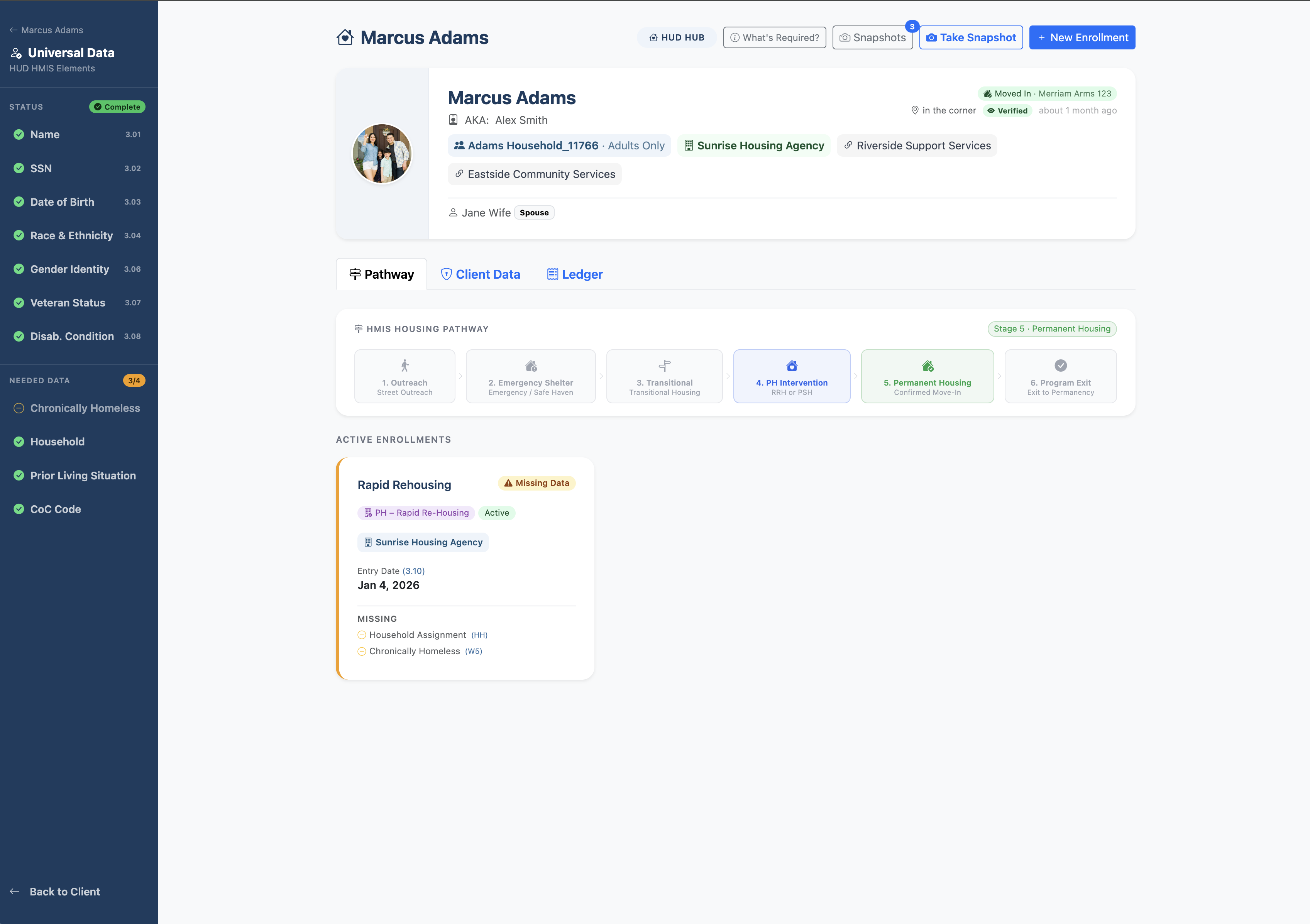
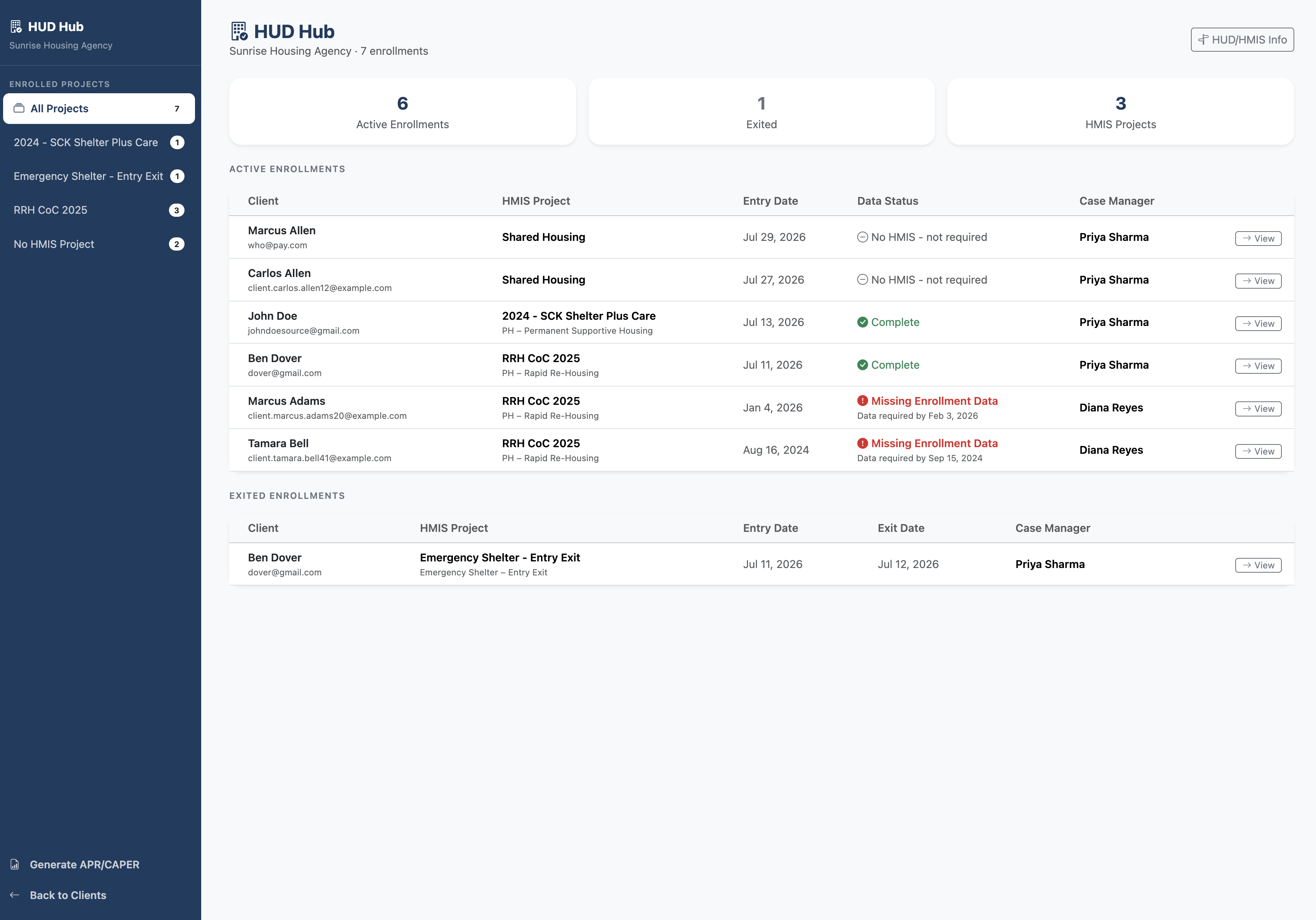
Client HUD Hub. Universal Data elements (3.01–3.08) with completion status, the HMIS Housing Pathway from outreach to permanency, and per-enrollment missing-data alerts.Agency HUD Hub. Every enrollment across every HMIS project, each row flagged Complete, Missing Enrollment Data, or "No HMIS — not required," with due dates and one-click APR / CAPER.
The Data Center
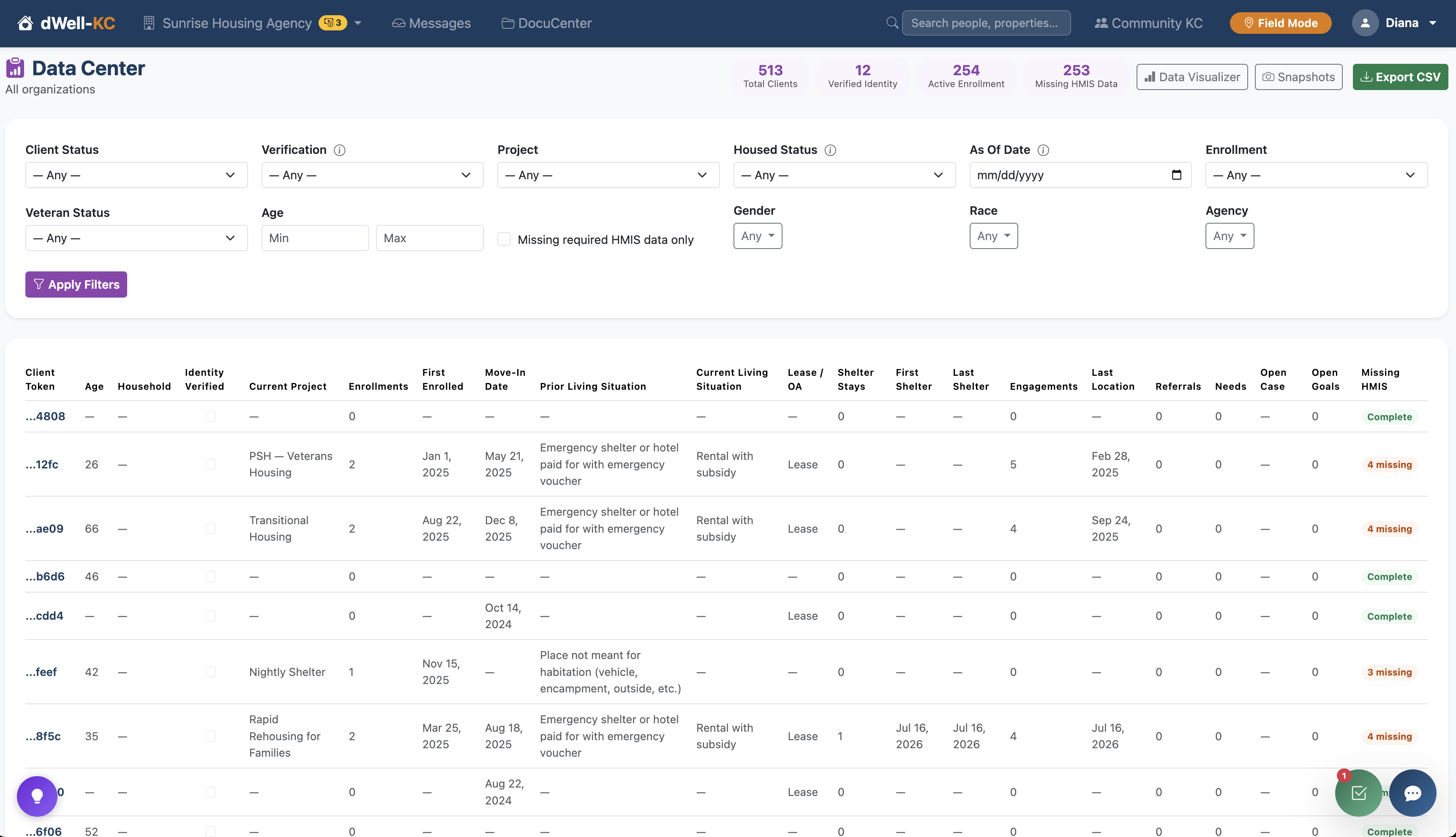
All of it at your fingertips. Filter every client by status, identity verification,
project, housed status, veteran status, age, gender, race, and an as-of date — then open
the Data Visualizer or download to CSV in a couple of clicks, with client identifiers
tokenized so the export stays anonymous.
Data Center. 513 clients, 254 active enrollments, 253 missing HMIS elements — every HUD field in one filterable grid, client tokens kept anonymous, with stat tiles, Data Visualizer, and Export CSV.
The Connective Tissue
What makes it one platform, not a dozen
Every module shares the same foundation. Build a form once and its data lands on the
client record. Start a pipeline in outreach and finish it in property management. Sign a
lease on a phone in the field. This is the layer that ties it all together.
Custom forms
Drag-and-drop builder for any intake, assessment, or survey — data flows straight to the client record.
Official forms
Pre-built HUD, CoC, and program forms kept current, filled from data you already have.
Custom pipelines
Configurable stage-based workflows — coordinated entry, placement, inspections — with automations at each step.
Identity verification
Confirm client identity and de-duplicate against the system of record before a record is ever created twice.
Live chat
Real-time messaging between staff, partner agencies, and — where appropriate — clients themselves.
Reporting
Every module feeds one reporting engine — operational dashboards and funder reports from the same data.
Electronic signatures
Sign leases, releases of information, and agreements from any device, filed automatically.
Document management
Every file attached to the right client, unit, or agency, with version history and expiration alerts.
Scan to interact
Scan a code or a document to pull up a client, check someone in, or trigger a workflow in seconds.
Geocoded tech
Every encampment, shelter, unit, and visit is on the map — route outreach and analyze by geography.
See It In The Product
Built and running in Kansas City
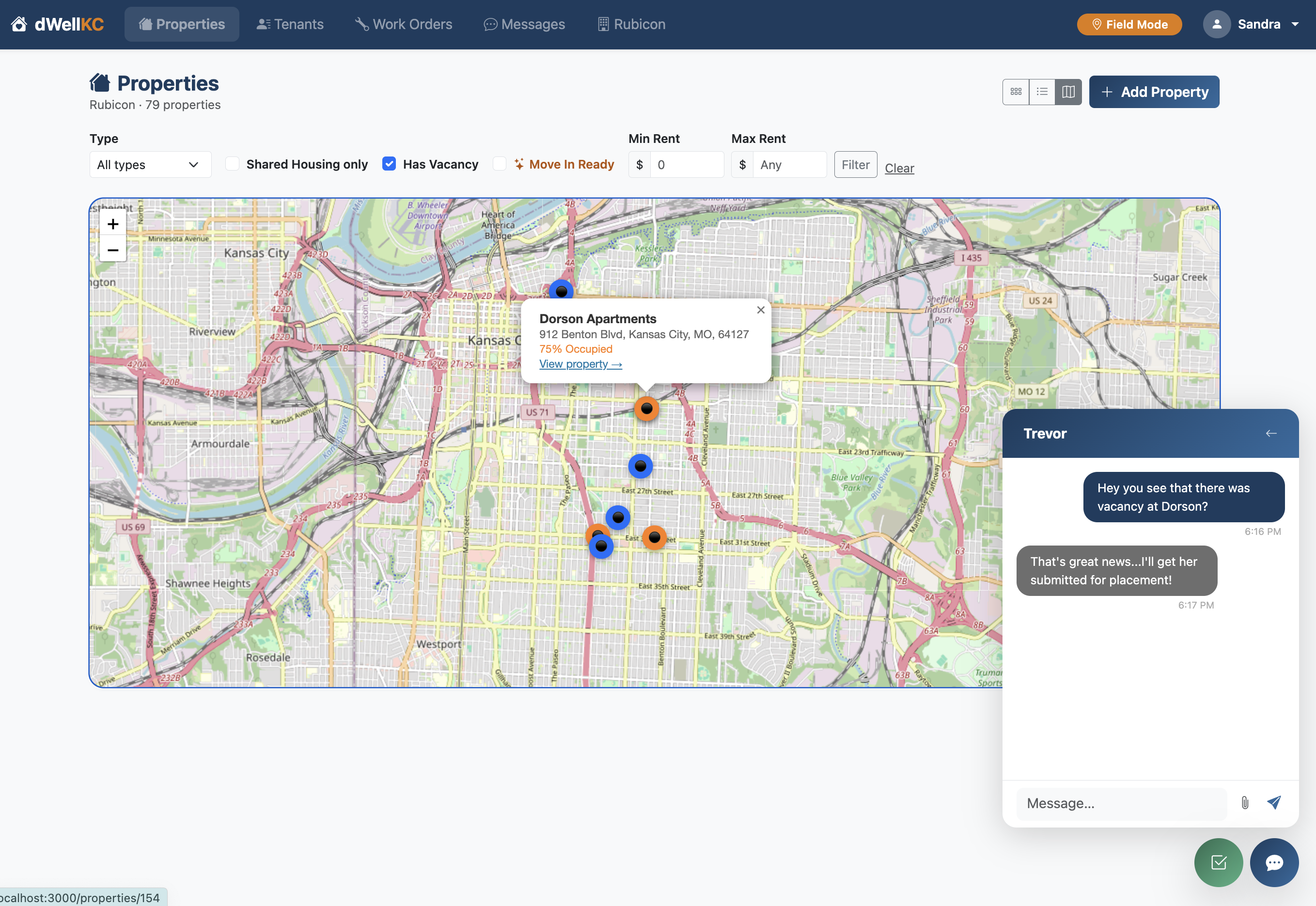
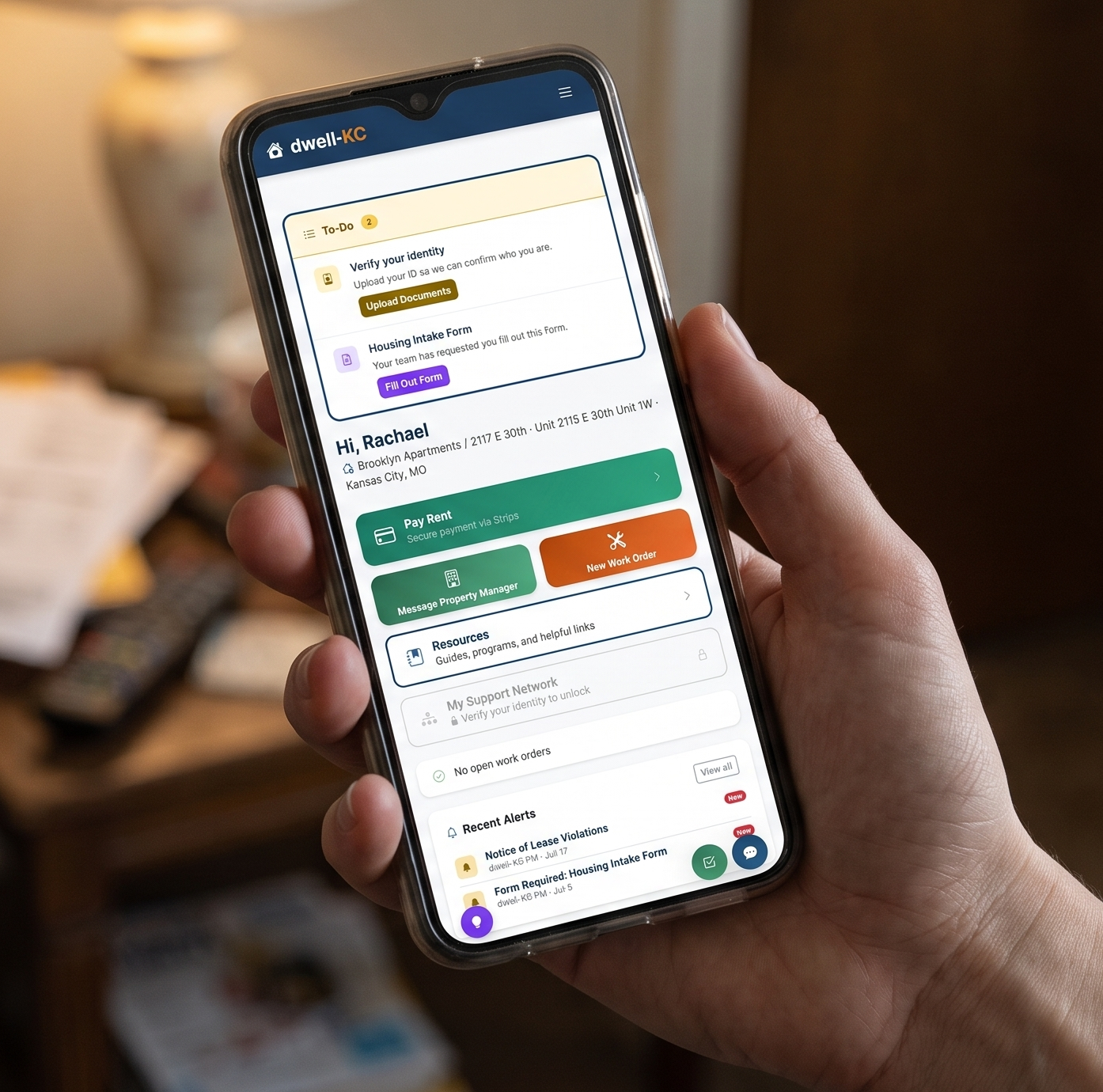
dWell-KC is live with real housing agencies, case workers, and outreach teams. This is
the working software — not a concept.
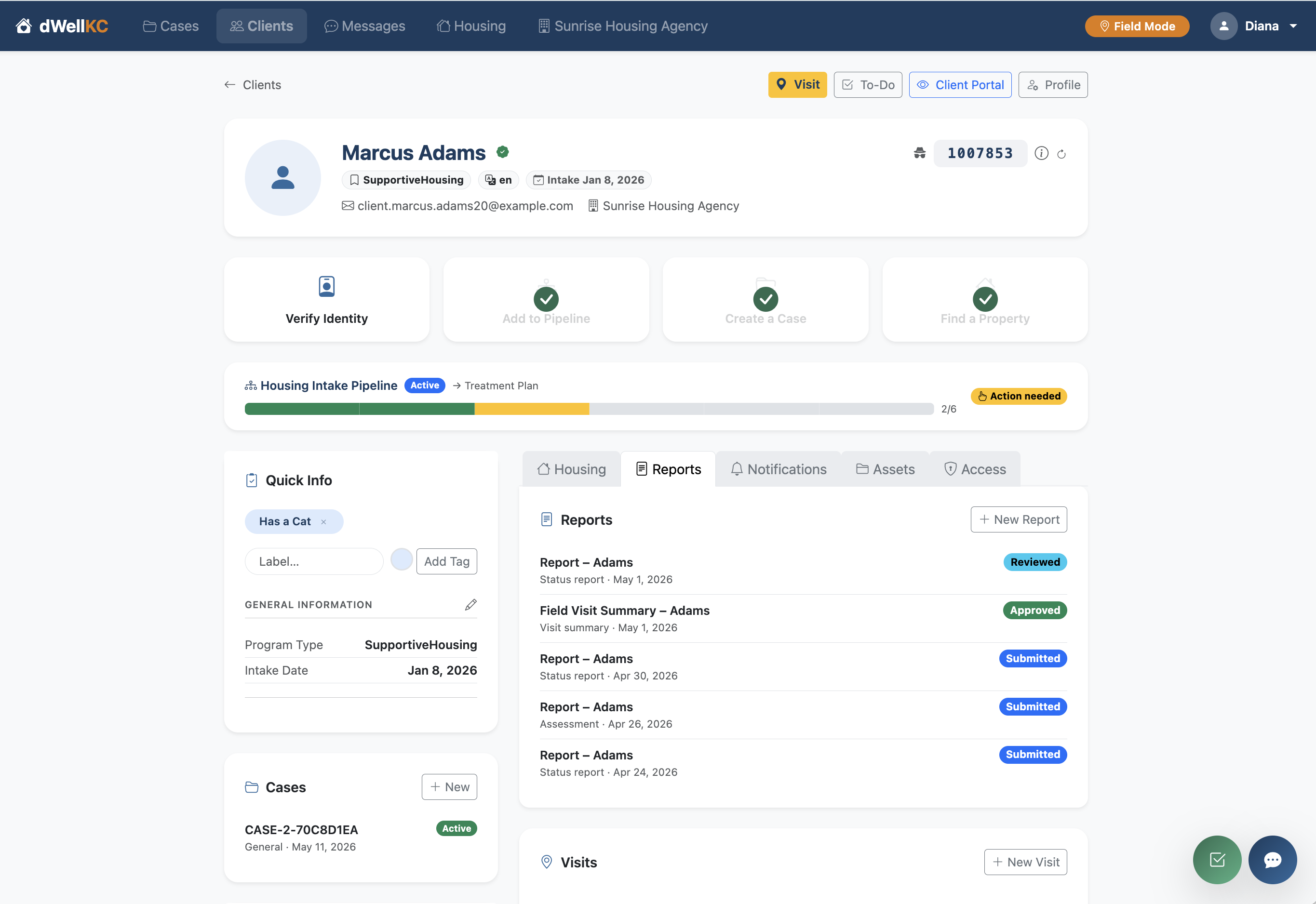
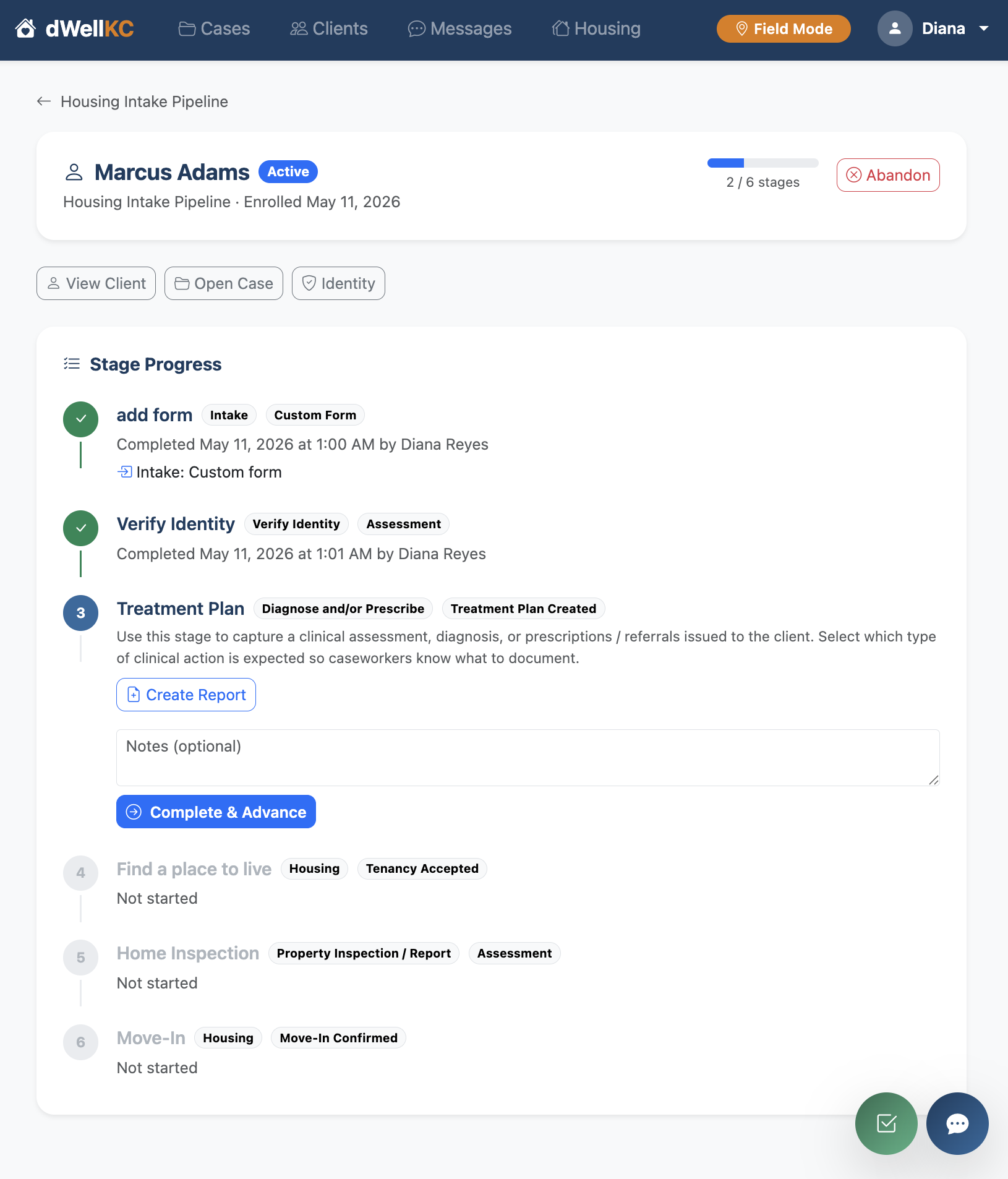
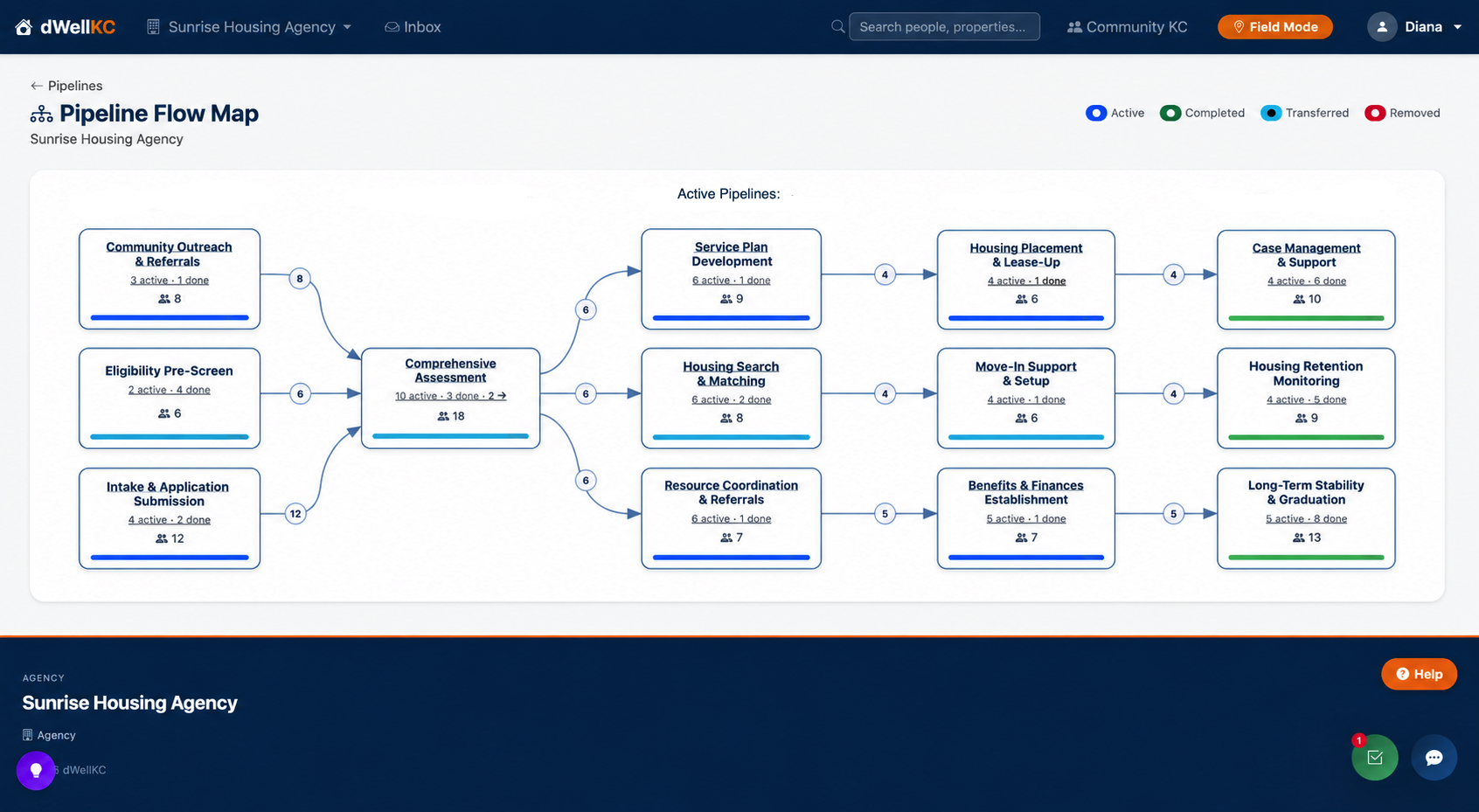
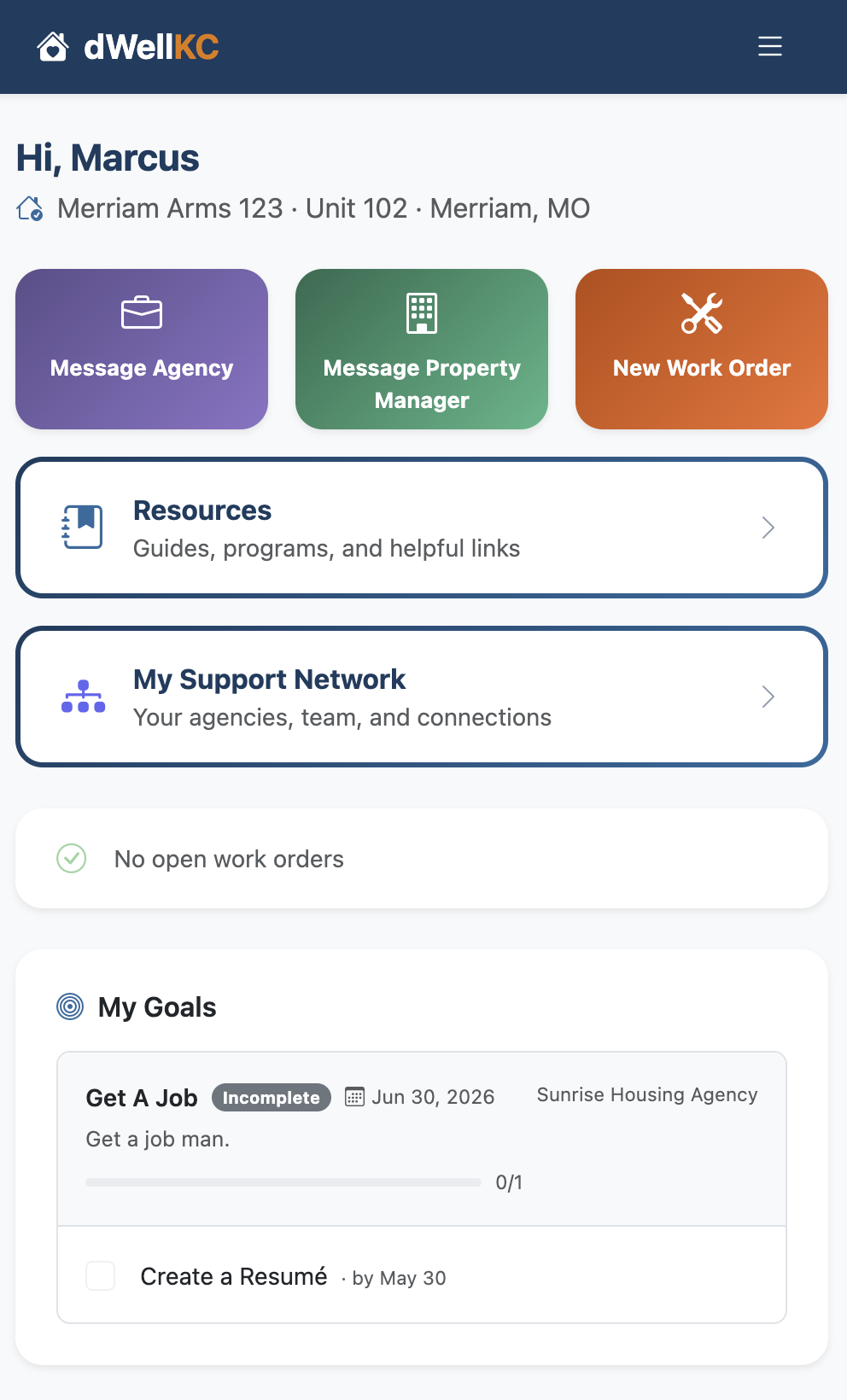
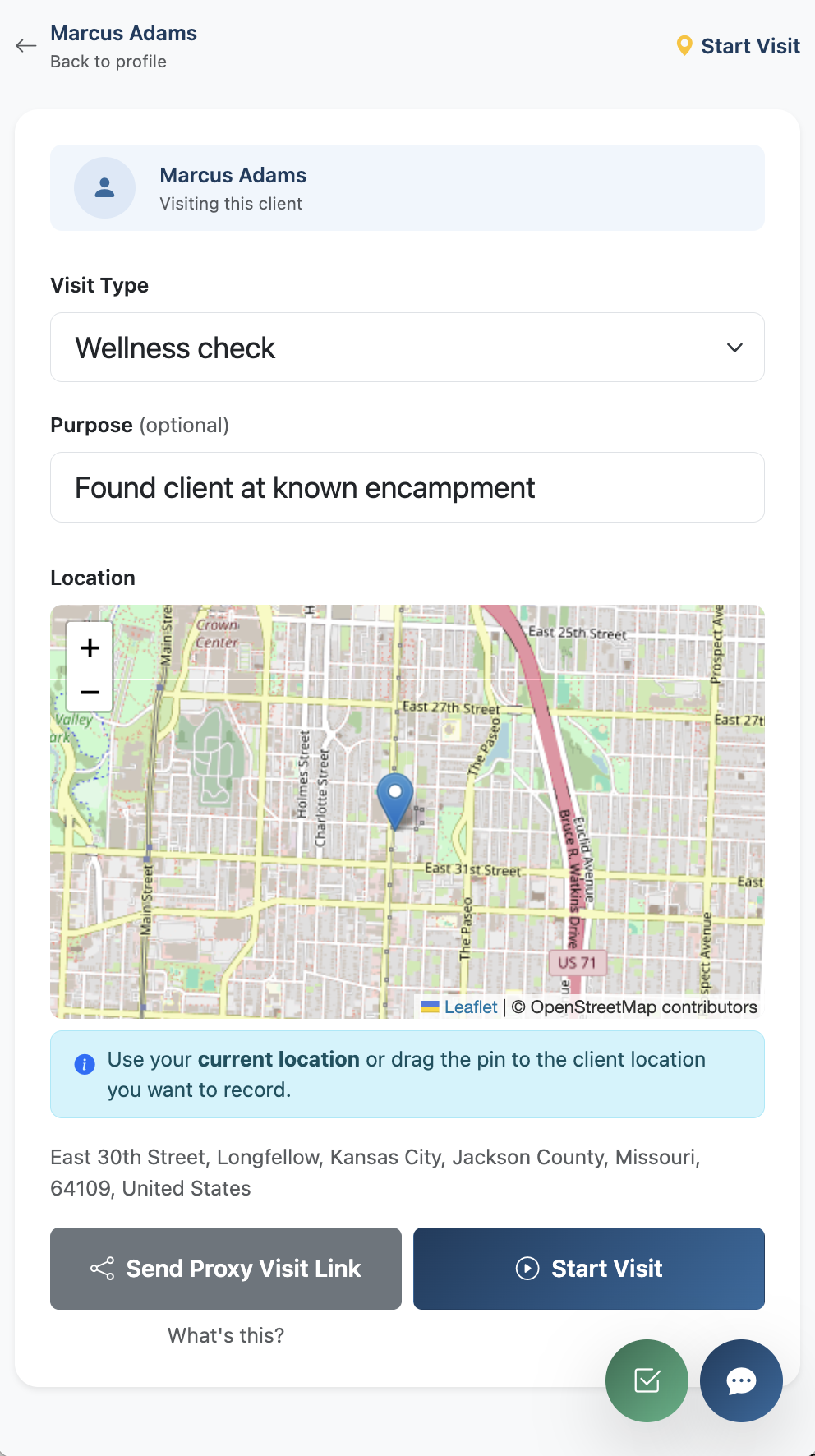
Custom pipelines. A client moves stage by stage — custom forms, identity checks, reports, and housing steps, each with its own actions.The whole caseload at a glance. Every pipeline, every stage, live counts of who is active, completed, transferred, or removed.The client's own view. Housing status, goals, work orders, resources, and a direct line to their agency and property manager.Field Mode. Geocoded visits and wellness checks recorded on the map, in the field, against the client's record.Placement-ready inventory. Filter the portfolio by vacancy and move-in readiness, then coordinate the placement in chat.Mobile-first. To-dos, identity verification, forms, rent payment, and work orders — all from a phone.
What It Replaces
Organizations already pay for a fragmented stack
Before a unified platform, most housing organizations stitch together seven, eight,
sometimes nine separate vendors just to run day-to-day operations.
Each tool solves one problem. None of them talk to each other.
In FY2024, HUD sent $203.9M to fund HMIS software and CoC planning
Every Continuum of Care in the country is required to run an HMIS. That is a quarter of a
billion dollars a year in federal money already committed to this work — funding software
and planning that hasn't kept pace with what teams on the ground actually need.
dWell-one is built to be the platform that spend deserves.
HMIS Funding
$68.3M
346 grants · 295 CoCs
CoC Planning Funding
$135.5M
361 grants
Combined FY2024 Spend
$203.9M
Nationally, HUD CoC Program
This is a revolutionary software stack
One connected platform for the entire housing response — from an encampment to a stable
home, and every form, signature, and hand-off in between.